Welcome To my Website

You’ve Been Diagnosed with Pancreatic Cancer— What’s Next?

Being diagnosed with pancreatic cancer can feel overwhelming — but you’re not alone. What you do next can make a big difference.

Know Your Cancer Type:

Not all pancreatic cancers are the same. The most common — and most aggressive — is pancreatic ductal adenocarcinoma (PDAC).

Another type, called neuroendocrine tumors, grows more slowly and may respond differently to treatment.

Knowing which type you have helps your care team choose the right plan for you. This website focuses on pancreatic adenocarcinoma, since it’s the most common.

Know Your Options!

Every pancreatic cancer is different — and so is the treatment.

That’s why genomic testing is so important. It looks at your cancer’s DNA
and RNA to find changes (mutations) that can help guide your treatment including both somatic and germline mutations.

It may help you qualify for:

  • Targeted therapies
  • Immunotherapy

Ask your doctor for a full genomic
profile, which may include testing for:

  • BRCA1/BRCA2 & other DNA repair genes
  • KRAS and MSI-H/dMMR

Testing is usually done through a biopsy, but sometimes a liquid biopsy (blood test) can be used.

Getting tested early can help create the most effective treatment plan.

What Is Genomics?

Genomic testing looks at the DNA of your cancer to find mutations. These changes may help your doctor choose more targeted and effective treatments.

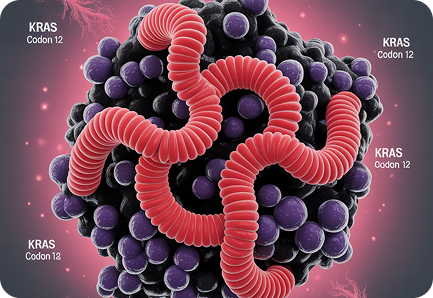
One key gene is KRAS. It helps control how cells grow.

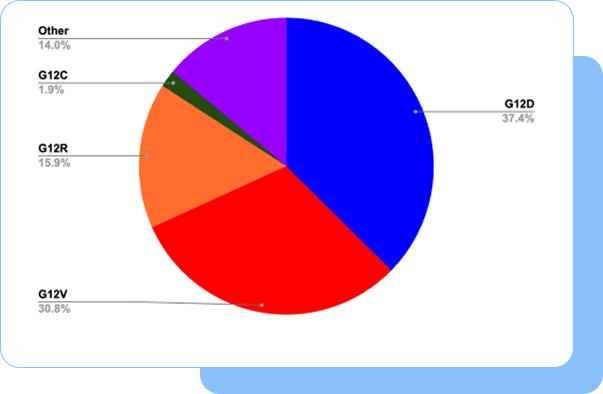
More than 90% of pancreatic adenocarcinomas have a KRAS mutation. Different mutations can affect how the cancer grows and responds to treatment. The most common are:

-G12D – ~40%

- G12V – ~33%

G12R – ~17% (new treatments in development)

G12C – ~2% (some treatments available)

*KRAS pathways. All the common mutations G12D, G12V, G12C, and G12S operate through PI3K alpha, and have no effector protein to interact with the MEK inhibitors. In contrast, G12R operates through PI3K gamma and HAS an effector protein that interacts with MEK inhibitor. This interaction is augmented in the presenceof gemcitabine/ gemzar (chemotherapy drug).

If You Have the G12R Mutation We’re Here to Help

The G12R mutation is found in about 17% of pancreatic adenocarcinomas. If you have this mutation, there’s promising news.

Our team discovered that adding a MEK inhibitor to standard chemotherapy can significantly improve survival.

Drugs like trametinib and cobimetinib may become part of your treatment plan.

Early research shows that patients with G12R may have the best survival outcomes among all KRAS codon 12 mutations.

We’re committed to advancing care for G12R — and supporting you every step of the way.

Research/Publications

Our treatment recommendations are guided by our most current research in pancreatic cancer genomics — especially in targeting KRAS mutations like G12R. For deeper insight into our scientific approach and treatmentstrategies, explore our following publications:

Already Have Your Results? Contact Us

Our expert team will review your genomic report and provide personalized treatment recommendations — including therapies or trials that align with your tumor’s specific mutations.

We’re Here to Help – Email Us

  • Email
    bardalan@med.miami.edu
  • Email
    doralaura2001@gmail.com